Each spring, the sands of Fort Lauderdale Beach are transformed into one of the most distinctive live music settings in the country as the Tortuga Music Festival returns with its signature blend of star power and environmental purpose. Scheduled for April 10–12, 2026, this year’s edition continues the festival’s evolution from a niche coastal gathering into a major fixture on the national music calendar—one that balances mainstream appeal with a mission-driven identity rarely seen at this scale.
From the outset, Tortuga has differentiated itself through its setting. Unlike sprawling inland festivals or urban park events, Tortuga unfolds directly on the beach, with stages positioned just steps from the Atlantic Ocean. The result is an atmosphere that feels both expansive and intimate: festivalgoers move barefoot through the sand, the ocean breeze cutting through the South Florida heat, while performances play out against a horizon that shifts from bright blue afternoons to neon-lit evenings. It is a sensory experience as much as a musical one, where environment and entertainment are inseparable.
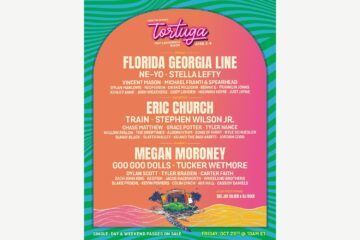
The 2026 lineup reflects the festival’s ongoing commitment to broadening its musical identity while remaining rooted in country traditions. Headlining this year are Kenny Chesney, Post Malone, and Riley Green—three artists whose careers, in different ways, embody the genre’s modern evolution. Chesney, long associated with beachside escapism and stadium-sized performances, feels like a natural fit for Tortuga’s coastal setting. His return underscores the festival’s ability to attract legacy acts whose music resonates with the environment itself.
Post Malone’s inclusion, meanwhile, highlights Tortuga’s willingness to stretch beyond traditional genre lines. Though best known for his work in hip-hop and pop, Malone has increasingly embraced country influences, collaborating with Nashville artists and incorporating acoustic elements into his live shows. His presence signals a continued blurring of genre boundaries, a trend that has become central to Tortuga’s programming philosophy. Riley Green rounds out the headliner trio with a more traditional country sound, offering a counterbalance that speaks to the festival’s roots.
Beyond the headliners, the lineup is stacked with a mix of established names and emerging voices, creating a layered musical experience across multiple stages. Fans can drift from high-energy main-stage performances to more intimate sets that showcase up-and-coming talent, often discovering new artists in the process. This sense of discovery has become one of Tortuga’s defining characteristics, encouraging exploration rather than anchoring attendees to a single stage.

Yet for all its musical appeal, Tortuga’s identity is inseparable from its environmental mission. The festival was founded in partnership with the Rock The Ocean Foundation, and that collaboration remains at the core of its operations. Over the years, the event has raised millions of dollars to support marine conservation efforts, funding research, advocacy, and educational initiatives aimed at protecting ocean ecosystems. In an era when large-scale events are increasingly scrutinized for their environmental impact, Tortuga has positioned itself as a model for how festivals can operate with purpose.
Central to this mission is the festival’s Conservation Village, an expansive, interactive area that serves as both an educational hub and a gathering space. Here, attendees encounter scientists, researchers, and representatives from leading environmental organizations, all working to translate complex ecological issues into accessible, engaging experiences. Exhibits range from hands-on demonstrations to immersive digital installations, offering insights into everything from coral reef restoration to the migration patterns of marine species. The goal is not simply to inform, but to inspire action—to turn casual festivalgoers into active participants in conservation efforts.
The presence of Conservation Village fundamentally alters the tone of the festival. It introduces a layer of intention that extends beyond entertainment, encouraging attendees to think critically about their relationship with the environment around them. In this way, Tortuga becomes more than a weekend escape; it becomes a platform for awareness and advocacy, leveraging its cultural reach to amplify messages that might otherwise struggle to find a mainstream audience.
Sustainability is also embedded in the festival’s day-to-day operations. Tortuga has implemented a range of initiatives designed to minimize its environmental footprint, from eliminating single-use plastic water bottles to promoting recycling and composting throughout the site. Water refill stations are readily available, encouraging attendees to bring reusable containers, while waste management systems are designed to divert as much material as possible from landfills. These efforts are supported by on-site volunteers who help guide festivalgoers toward more sustainable practices, reinforcing the event’s broader message.
One of the more notable aspects of Tortuga’s environmental strategy is its timing. Held during sea turtle nesting season along the Florida coast, the festival incorporates protective measures to ensure that local wildlife is not disturbed. Lighting is carefully managed to avoid disorienting hatchlings, and certain areas of the beach are monitored to prevent interference with nesting sites. These considerations underscore the complexity of hosting a large-scale event in a sensitive ecosystem—and the level of planning required to do so responsibly.
Despite its growth, Tortuga has managed to retain a sense of community that can be difficult to maintain at festivals of its size. Part of this is due to its layout, which encourages movement and interaction rather than isolating attendees in massive crowds. But it is also a reflection of the shared values that underpin the event. The emphasis on conservation creates a common thread that connects attendees, artists, and organizers, fostering a collective identity that goes beyond music.
The festival’s economic impact on the surrounding area is also significant. Each year, thousands of visitors descend on Fort Lauderdale, filling hotels, restaurants, and local businesses. While this influx provides a boost to the local economy, it also reinforces the importance of sustainable tourism practices—another area where Tortuga has sought to lead by example. By integrating environmental messaging into every aspect of the event, the festival encourages visitors to engage with the destination in a more responsible way.
Artist participation in the conservation mission further amplifies its reach. Many performers use their platforms during the festival to highlight environmental issues, whether through on-stage remarks, social media engagement, or direct involvement with Conservation Village activities. This alignment between artists and the festival’s mission adds authenticity to its messaging, ensuring that the focus on ocean conservation is not merely a branding exercise but a genuine commitment shared across all levels of the event.
As the sun sets over the Atlantic and the stages light up for the evening’s headlining performances, the dual nature of Tortuga becomes most apparent. On one hand, it delivers the spectacle and excitement expected of a major music festival: massive crowds, high-energy performances, and a carefully curated lineup designed to appeal to a wide audience. On the other, it operates as a platform for education and advocacy, using its visibility to draw attention to some of the most pressing environmental challenges of our time.
This balance is not always easy to achieve. Festivals, by their nature, are resource-intensive events, requiring significant infrastructure and generating substantial waste. Tortuga’s success lies in its willingness to confront these realities head-on, implementing practical solutions while continuously seeking to improve. It is an ongoing process rather than a finished product, one that evolves with each passing year as new technologies and strategies become available.
Looking ahead, the 2026 edition of the Tortuga Music Festival represents both a continuation of established traditions and a step forward in its ongoing development. The lineup reflects the current state of popular music, blending genres and appealing to diverse audiences, while the conservation initiatives demonstrate a deepening commitment to environmental stewardship. Together, these elements create an experience that is as meaningful as it is entertaining.
For attendees, the appeal of Tortuga lies in this convergence. It is an opportunity to see some of the biggest names in music perform in a unique setting, but also to engage with issues that extend far beyond the festival grounds. It invites participants to consider the impact of their actions, both during the event and in their lives, fostering a sense of responsibility that lingers long after the final notes have faded.
In a crowded festival landscape, where differentiation is often driven by lineup announcements or production value, Tortuga stands apart by offering something more substantive. It demonstrates that large-scale entertainment and environmental responsibility are not mutually exclusive, but can in fact reinforce one another when approached with intention and care.
As April approaches and preparations along Fort Lauderdale Beach intensify, anticipation continues to build for what promises to be another memorable installment of the Tortuga Music Festival. For three days, music and mission will once again share the same stage, carried on the rhythm of the ocean and the energy of a crowd united by more than just a love of live performance.